For businesses in the food service industry and food retailers, ensuring commercial refrigerator units maintain the right temperature is essential for compliance and food safety. A damaged fridge seal might look like a small problem, but in a commercial setting, it can quietly undermine the entire cold chain.
By letting cold air escape, a worn, cracked, or loose seal can not only compromise food safety, but also hike up energy bills, and strain your equipment until it fails altogether.
Left unchecked, what started as a simple maintenance issue can end with a costly repair, reputational damage or a full equipment replacement.
In this blog, we’ll examine the risks of damaged fridge seals and how engineers and facility managers can prevent them.
Understanding legal compliance in the UK
Compliance with cold holding standards is an absolute legal requirement for food-related businesses. According to the Food Standards Agency, fridges and chilled display equipment should be set at 8°C or below as a legal requirement.
Under The Food Safety (Temperature Control) Regulations 1995 and the Food Safety and Hygiene (England) Regulations 2013, food that is likely to support the growth of pathogenic micro-organisms must be chilled to 8 °C or below when held on premises in England, Wales or Northern Ireland. For best practice in the UK, the target is often lower, around 5 °C or less, especially for high-risk foods.
Businesses must operate a food safety management system based on the Hazard Analysis and Critical Control Point (HACCP) framework, which includes regular temperature monitoring and records.
If a fridge gets warmer than the permitted range, that must trigger documented corrective action. Failure to comply can lead to enforcement action, fines or worse.
The risks and consequences of damaged fridge seals for businesses
Damaged fridge seals can have multiple consequences on your business operations:
- Bacterial growth and contamination
- Compliance violations
- Damage to your business reputation
- Inventory loss and food spoilage
- Energy waste and higher costs from inefficiency and repairs
Bacterial growth and contamination

When food isn’t kept at the right temperature, above 8°C for chilled foods or below the recommended level for hot foods, it enters the “danger zone” where bacteria can grow quickly.
Keeping food at 8°C or below slows down bacterial growth. But even a small temperature increase can speed it up. Harmful bacteria like Listeria, Salmonella, and E. coli multiply fast when warm, humid air gets into cold storage.
A damaged seal causes exactly this problem: warm air gets in, cold air leaks out, and the fridge temperature becomes unstable.
Even worse, when the temperature keeps going up and down, it doesn’t just allow more bacteria to grow; it can also make some bacteria tougher and harder to kill. For example, Listeria can become more resistant to freezing and thawing.
Commercial cold holding standards and microbiological risk
Here is a table about the UK’s legal requirements and recommendations for food business operators in England, Wales, and Northern Ireland with associated microbiological risks:
| Standard/zone | Temperature requirement | Primary microbiological risk |
|---|---|---|
| UK legal chill holding | 8°C or below (46.4°F or below) | Limits the growth of common pathogenic micro-organisms like Listeria, Salmonella, and E. coli. |
| UK recommended chilling | 5°C or below (41°F or below) | Provides an additional safety margin against bacterial growth, as growth slows significantly below 5°C. |
| UK temperature danger zone (TDZ) | 8°C to 63°C (46.4°F to 145.4°F) | Rapid, exponential growth (doubling every ∼20 minutes) of pathogens like Salmonella and E. coli. The optimal growth temperature is ∼37°C (human body temperature). |
| UK hot holding requirement | Above 63°C (Above 145.4°F) | Ensures that food is held at a temperature high enough to prevent bacterial multiplication. |
| UK time/temperature threshold for discard | Chilled food: Held above 8°C for more than 4 hours (single period exception). | Exceeds the maximum safe time within the TDZ; food must be discarded due to assumed excessive microbial load. |
Compliance violations
Environmental health officers (EHOs) look closely at fridge door seals and cold rooms during food-safety inspections because they’re a clear indicator of hygiene and temperature control. A split, mouldy, or dirty door gasket tells them that cold storage may not be working as it should, and that’s enough to trigger deeper scrutiny.
Once inspectors spot signs like mildew, pooled condensation, or perished rubber, they’ll likely check the internal temperature, review HACCP logs, and assess whether food is being stored below the legal limit of 8°C.
If records show temperatures consistently above safe levels, the business risks fines, enforcement notices, or even temporary closure until corrective actions are taken.
Damage to your business reputation
Bad news spreads quickly. If your business gets a low food hygiene rating or has a food safety problem, customers will find out fast, especially since ratings are posted publicly on the Food Hygiene Rating Scheme. For cafés, restaurants, butchers, and bakeries, a poor score means fewer customers walking through your door.
In serious cases, temperature problems can lead to dangerous bacteria like Listeria or Salmonella growing in food. If customers get sick from your food, your business could face legal action, expensive product recalls, and long-term damage to your reputation that’s hard to fix.
Inventory loss and food spoilage
When a fridge seal is damaged, the unit can’t keep food at a safe, steady temperature. This causes food to spoil too early. Fresh produce, dairy, meat, and baked goods are especially at risk because they’re sensitive to temperature changes.
Staff often notice that food is going bad before its use-by date, a clear sign that the fridge is getting too warm.
The cost of this food waste adds up quickly. Damaged seals make it harder to keep food cold throughout the supply chain, leading to significant waste. Businesses lose money not only from throwing away spoiled food, but also from the time and effort already spent handling and preparing it. All of this hurts the bottom line.
Energy waste and higher costs from inefficiency and repairs
A faulty fridge seal can have significant financial repercussions. Commercial fridges already have high energy consumption; they can account for up to 40% of a kitchen’s total energy costs. When seals are worn out, the fridge’s energy efficiency plummets as the appliance has to work overtime and use much more electricity to maintain temperature.
That means a single faulty seal can waste hundreds of pounds in energy bills every year.
The extra workload also damages the compressor because it has to run constantly. This non-stop strain shortens the life of the entire fridge and leads to expensive breakdowns and early replacement.
By promptly replacing the door seals that are worn or damaged, businesses can reduce energy wastage by up to 15-21% per unit.
How to tell if your commercial fridge or freezer door seal Is damaged
Spotting the signs of a damaged seal early can help you keep your appliance running efficiently and avoid bigger problems down the line. Regular checks of your fridge and freezer door seals can catch these warning signals before they become costly issues.
- Visual wear and tear: Inspect the rubber or silicone seal around the door closely. Look for cracks, splits, tears, or areas that appear brittle or misshapen. Check whether the seal sits flush against the door frame or if there are visible gaps. Even small signs of wear can allow cold air to escape and warm air to enter, reducing your fridge’s efficiency.
- Condensation around the door: If you notice moisture building up around the door or excessive frost inside (especially in frost-free models), the seal is likely letting in warm, humid air. This moisture reacts with the cold interior, causing condensation or ice to form where it shouldn’t. If you’re regularly wiping away moisture or your frost-free freezer is icing up, the seal is probably the culprit.
- Difficulty closing the door: The door feels harder to close, pops back open slightly, or requires excessive force to shut. A stiff or warped seal prevents the door from creating the necessary airtight, magnetic closure.
- Warm interior temperature: The most immediate warning sign is when the cabinet interior feels warmer than it should be. Commercial units should maintain temperatures at or below 8°C for chilled foods. If the interior consistently exceeds safe limits, it indicates the seal is no longer creating an airtight barrier.
- Hygiene risk (mould, mildew, dampness): The seal feels wet to the touch or shows signs of dark mould or mildew. This indicates moisture and debris are accumulating where the seal has failed, creating both a performance issue and a serious food safety concern.
- Constant compressor running: Commercial refrigeration units are designed to reach the target temperature and then cycle off. If your unit runs constantly without quiet periods, it’s a clear sign the seal is failing. The compressor is working overtime to compensate for warm air getting in through the damaged seal.
- Rising energy bills: Your electricity bills have increased without a corresponding increase in kitchen usage. A faulty seal forces the fridge to work harder and consume significantly more energy.
- Excessive ice or frost build-up: In frost-free units, any excessive or rapid frosting—particularly around the door frame or near the evaporator coils—indicates humid air is entering through a leaky seal. Even in non-frost-free models, an unusual increase in ice formation compared to normal use is a red flag.
- Puddles of water on the floor: Finding water pooling around your fridge or freezer is another clear indicator. A faulty seal causes extra condensation inside, which drips down and collects on the floor. Excessive interior ice that melts can also create puddles. If you’re mopping up frequently, it’s time to replace your seal.
- Premature food spoilage If staff consistently report that perishable items, like fresh produce, dairy, meat, or baked goods, are spoiling before their use-by dates, this points to sustained high internal temperatures caused by insufficient cooling from a damaged seal.
By staying alert to these signs and conducting regular inspections of your fridge and freezer door seals, you can address problems early and avoid costly repairs, food waste, and energy inefficiency.
How to maintain commercial fridge and freezer seals
Proactive maintenance of commercial fridge and freezer seals is a simple yet crucial step that is often overlooked. Facility managers and engineers must follow these key procedures to ensure long-term equipment performance, prevent energy waste, and maintain regulatory compliance.
Regular cleaning and inspection for food safety compliance
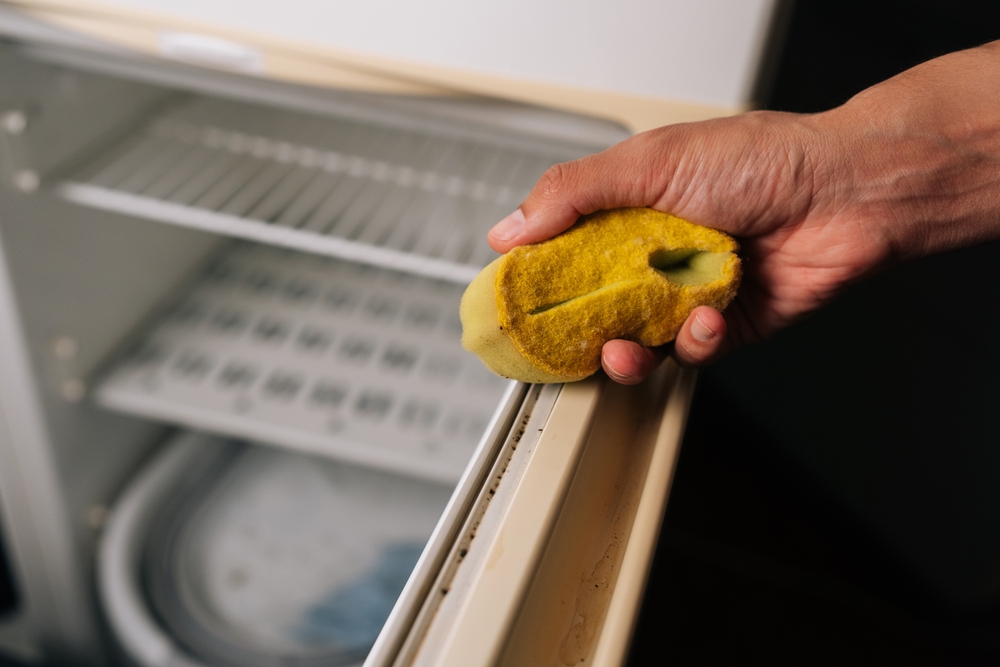
In commercial food operations, fridge and freezer door seals are high-risk areas for bacterial contamination and mildew, especially in high-traffic kitchen and storage environments. Regular maintenance is essential for food safety compliance:
- Clean daily or weekly using food-safe, water-based disinfectants approved for commercial food service
- Inspect weekly or bi-weekly for tears, stiffness, cracks, or contamination as part of your standard maintenance checklist and food safety protocols
How to clean fridge seals
You’ll need a soft cloth, mild soap and warm water, and a soft brush, with baking soda paste for tougher spots. The key steps are:
- Gently wiping the entire seal (especially the crevices that trap debris)
- Scrubbing stubborn dirt or mould (using baking soda if needed)
- Finally, thoroughly drying the seal to prevent moisture buildup and subsequent mould growth.
In commercial settings, seals should also be regularly sanitised with food-safe disinfectants to meet critical food safety standards.
Create a documented maintenance schedule
Establish a formal, official maintenance programme that includes seal care:
- Add seal inspections to your daily opening and closing checklists alongside temperature checks
- Assign specific staff members the responsibility for monitoring seal condition in different areas (kitchen, storage, display cases)
- Keep a maintenance log documenting when seals were inspected, cleaned, or replaced—this helps with compliance audits and tracks equipment history
- Schedule reminders for weekly or bi-weekly detailed inspections using your existing maintenance management system.
Replacing commercial refrigeration seals
In case of damaged fridge seals, they should be replaced as soon as possible. Once you have the correct seal for your appliance model, fridge seals can be replaced in-house in under 3.5 minutes. The process is simple and straightforward, making replacement easy even across multiple facilities.
If you are managing multiple sites, check out our Guide to Managing Fridge Seal Replacements Across Sites for more information.
To change a damaged fridge seal, follow these steps:
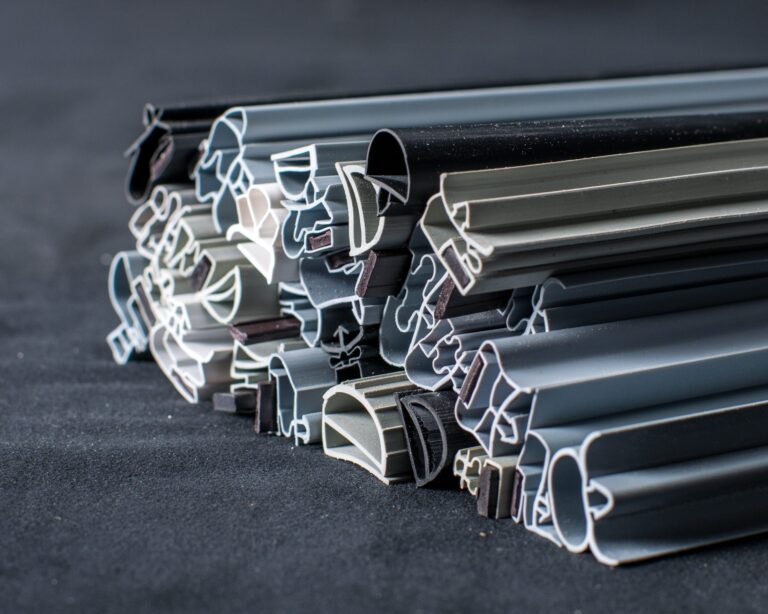
- Identify the correct commercial gasket by either using the refrigeration unit’s model number or accurately determining the cross-sectional profile of the existing seal. Commercial refrigeration units, particularly walk-in coolers and reach-in units, usually use rubber fridge seals or PVC curtains.
If you need to replace a rubber gasket, follow this guide on how to order our bespoke rubber fridge seals.
The Seal Company manufactures bespoke rubber fridge seals and custom PVC curtain solutions for all commercial refrigeration. For walk-in coolers, we offer fully customisable PVC curtain strip sets (including six strips and a hook-on head rail) tailored to your exact measurements and temperature requirements.
- Measure your fridge seal. If you need help measuring your fridge seal, follow this step-by-step video.
- Order in bulk: Maintain a consistent supply and standardised seal quality across sites by utilising bulk ordering, which also significantly reduces overall purchasing costs. At The Seal Company, we also ship our products worldwide, ensuring secure and cost-efficient delivery methods.
We are uniquely positioned to handle bulk orders of branded seals,bespoke gaskets and PVC curtains. We offer Next Day Delivery on 85% of stock orders, alongside an easy ordering process via our online system or direct customer service.
Choose commercial-grade materials when buying a seal replacement
When purchasing replacement fridge and freezer seals in bulk, it’s important to choose quality materials. The Seal Company specialises in manufacturing replacement seals that meet or exceed Original Equipment Manufacturer (OEM) quality, guaranteeing a precise and perfect fit for your specific fridge and freezer model.
- Silicone seals are optimal for commercial freezers: maintains flexibility in extreme cold temperatures.
- Rubber seals: ideal for large commercial cold rooms and freezers, they are made from high-quality materials that withstand the rigours of daily use. They usually require a plastic retainer for secure fitting.
- Neoprene offers superior durability against physical wear and chemical resistance in demanding kitchen environments
- Flexible PVC is the standard for most magnetic gaskets and curtains for commercial units.
Conclusion
Damaged fridge seals are easy to overlook, but their impact on food safety, energy use, and equipment reliability is significant. A worn or split gasket can result in higher energy bills, faster wear on equipment, and an increased risk of food spoilage, all of which can lead to compliance failures and reputational damage.
The good news is that prevention is straightforward. Regular checks and routine cleaning with food-safe products can make all the difference. The cost of a fridge replacement is much more affordable and far cheaper than dealing with wasted stock or a broken compressor.
By treating gasket care as part of your standard food safety and maintenance routine, you’re protecting more than just your fridge. You’re safeguarding your business, your customers, and your bottom line.
If you are looking to place a bulk order, get in touch with our team for a personalised quote.