
Help us identify your seal

Not sure what seal you need? Fill in the form below and our team will identify it for you and get back to you within 1 working day.

Please provide as much information as possible, including the cross-section image and outside edge or dart centre measurements.

View measurement help guide

You can upload up to 3 cross-section and dataplate images, up to 5MB each (JPG, JPEG, PNG, GIF, WebP, HEIC formats).

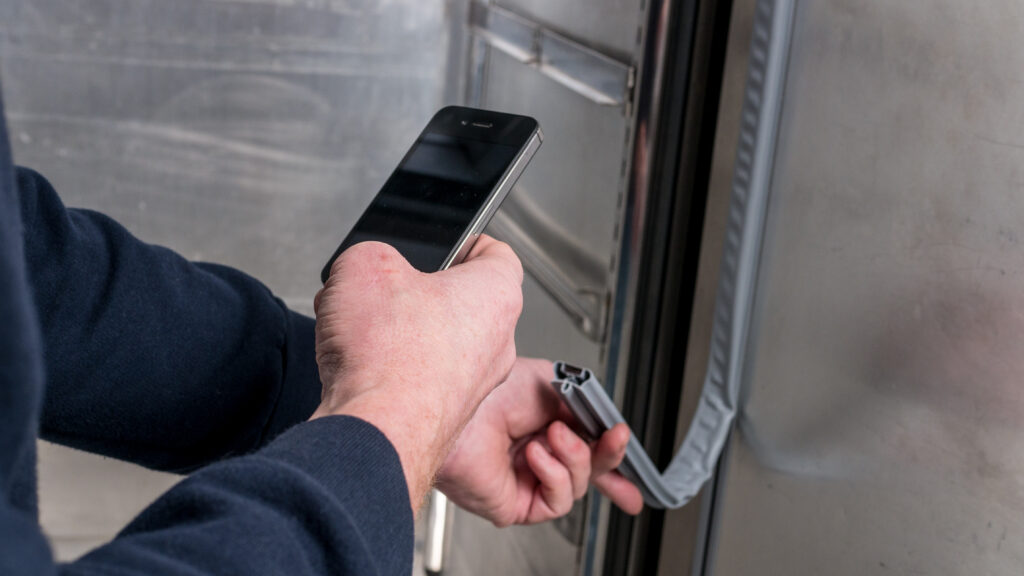
How to take a cross-section image
A person wearing a dark long-sleeve shirt holds a mobile in one hand and inspects the rubber seal on the edge of a metallic door with the other hand. The setting appears industrial or commercial, with stainless steel surfaces visible.
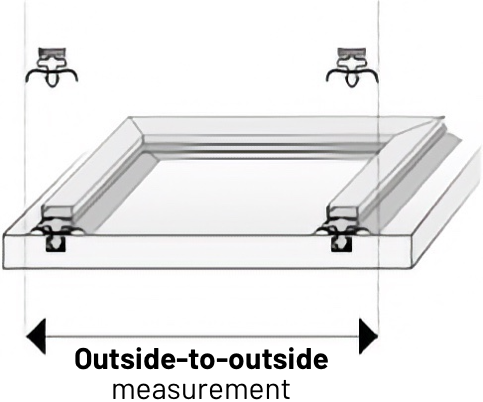
How to take an outside edge measurement
A diagram showing a cross-section of a seal mounted onto a surface. It shows two lines across the two parallel outsides of dart seals, with an arrow between the lines to demonstrate the outside-to-outside measurement.

Outside-to-outside measurements can be applied for all refrigerator door seals. We advise to take outside-to-outside measurements while the seal is still fitted in the refrigerator door or drawer.

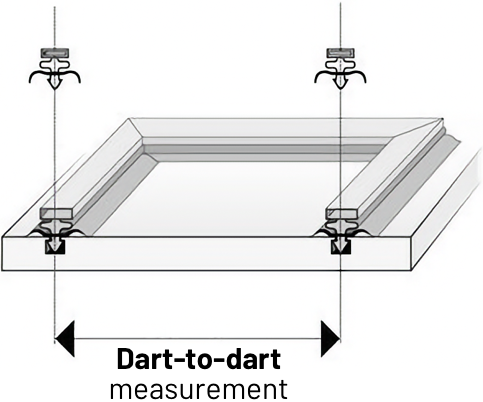
How to take a dart centre measurement
A diagram showing a cross-section of a seal mounted onto a surface. It shows two lines across the two parallel centres of dart seals, with an arrow between the lines to demonstrate the dart-to-dart measurement.

For dart type (push-in) profiles it is possible to measure dart-to-dart (centre-to-centre). In practice, this means you measure the inside edge of the slot on one side to the outside edge of the slot on the other side.
How to take an outside edge measurement
A diagram showing a cross-section of a seal mounted onto a surface. It shows two lines across the two parallel outsides of dart seals, with an arrow between the lines to demonstrate the outside-to-outside measurement.

Outside-to-outside measurements can be applied for all refrigerator door seals. We advise to take outside-to-outside measurements while the seal is still fitted in the refrigerator door or drawer.

How to take a dart centre measurement
A diagram showing a cross-section of a seal mounted onto a surface. It shows two lines across the two parallel centres of dart seals, with an arrow between the lines to demonstrate the dart-to-dart measurement.

For dart type (push-in) profiles it is possible to measure dart-to-dart (centre-to-centre). In practice, this means you measure the inside edge of the slot on one side to the outside edge of the slot on the other side.

How to take a cross-section image
A person wearing a dark long-sleeve shirt holds a mobile in one hand and inspects the rubber seal on the edge of a metallic door with the other hand. The setting appears industrial or commercial, with stainless steel surfaces visible.
How to take an outside edge measurement
A diagram showing a cross-section of a seal mounted onto a surface. It shows two lines across the two parallel outsides of dart seals, with an arrow between the lines to demonstrate the outside-to-outside measurement.

Outside-to-outside measurements can be applied for all refrigerator door seals. We advise to take outside-to-outside measurements while the seal is still fitted in the refrigerator door or drawer.

How to take a dart centre measurement
A diagram showing a cross-section of a seal mounted onto a surface. It shows two lines across the two parallel centres of dart seals, with an arrow between the lines to demonstrate the dart-to-dart measurement.

For dart type (push-in) profiles it is possible to measure dart-to-dart (centre-to-centre). In practice, this means you measure the inside edge of the slot on one side to the outside edge of the slot on the other side.